In a Free State: Free Your Mind and Your Ass Will Follow
Aparna Sarkar July 31. 2026
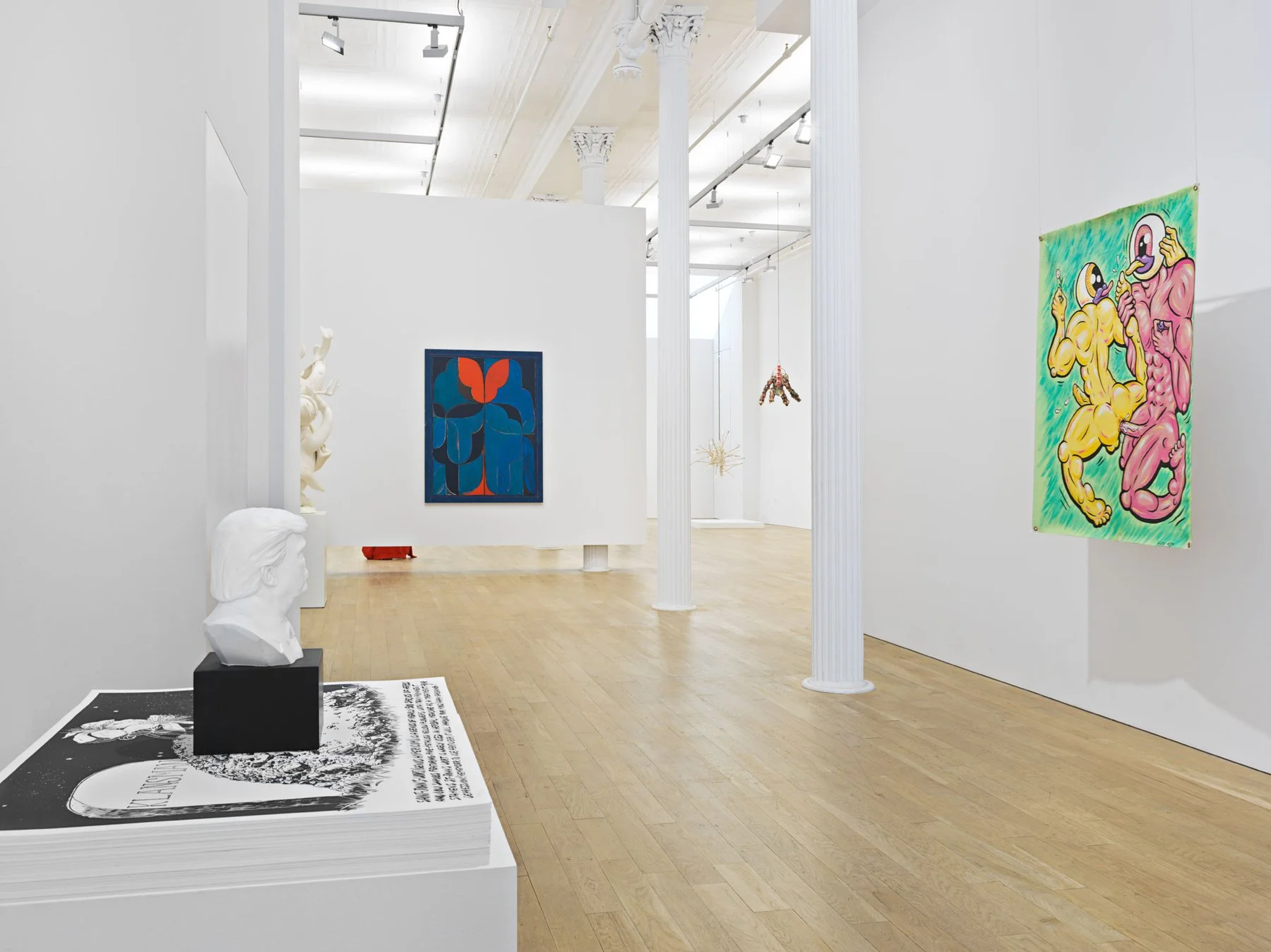
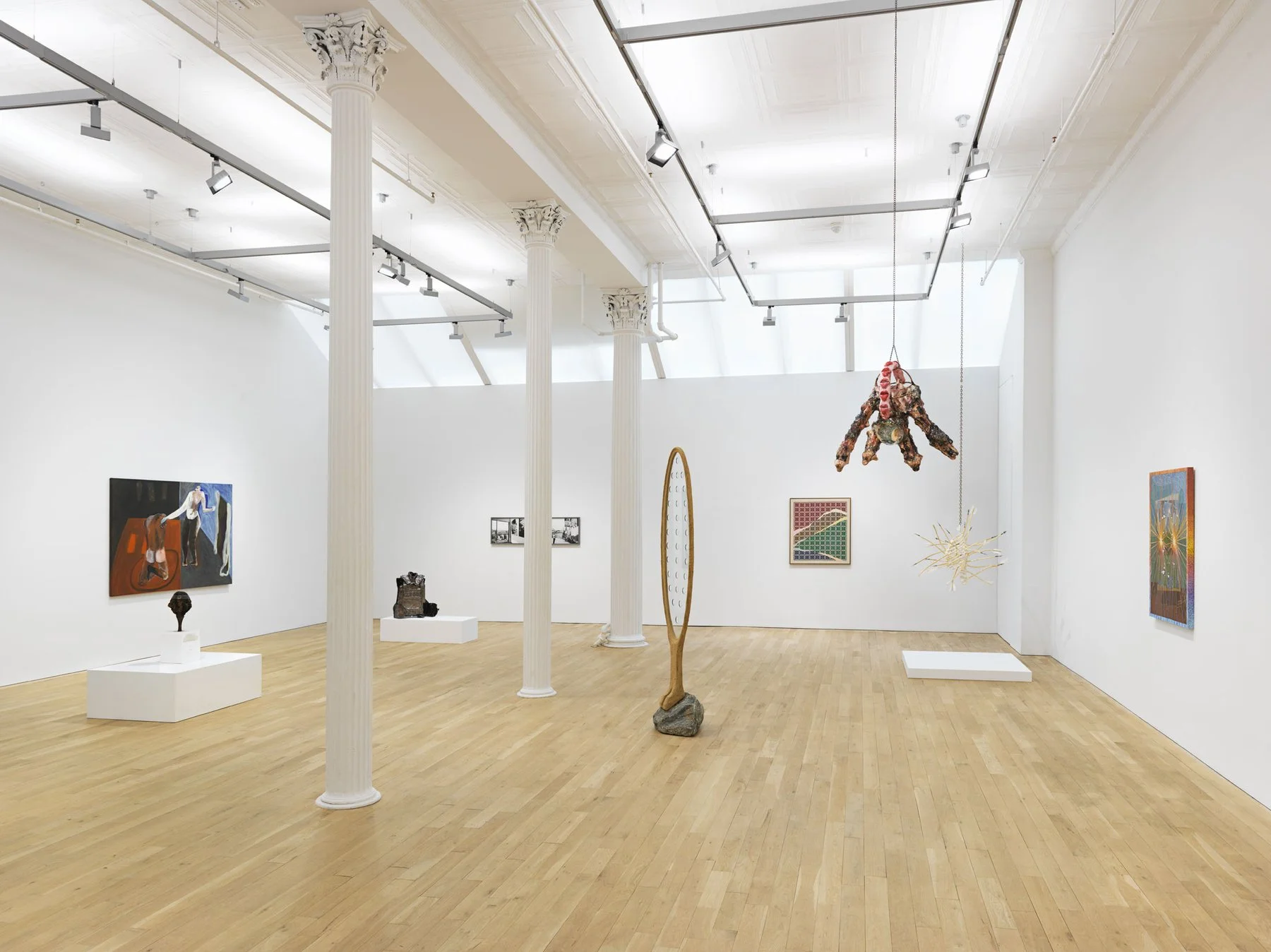
Installation view of In A Free State at Luhring Augustine New York, NY
In the past few years, I’ve been looking to other artists for examples of how to contend in the studio with the active political collapse and complicity that we are living through. How can we make work that doesn’t keep its head down, but picks it up and yells —while avoiding the vanity of churning the image mill, or just pacifying collective guilt? The group show In a Free State at Luhring Augustine, curated by painters Salman Toor and Doron Langberg, is ripe ground for response to this question.
A couple of points make this show feel electric, a road map for possibility in the face of daily horror, grief, absurdity. First: some key pieces are overt, naming the oppressions they tackle outright. This naming feels so good, in part because it is uncommon in gallery spaces. It also creates an atmosphere in which more abstract works in the show gain context through osmosis. Then, there’s a shared call between works to find mental freedom in aesthetic sensuality as an enactment of the id: to follow your hands, your body through material and place and to let what you make reflect what it will.

Mark Thomas Gibson “Better Days Ahead” (2026), consisting of “Paperweight” (2026), and “A Cure For Depression” (2026)
Inside the gallery entrance, a stack of Mark Thomas Gibson prints names its subject loudly. His drawings of St. John’s wort growing out of a Klansman grave are held down by a bust of Tr*mp. When you pick up the bust to take a drawing, a bell underneath rings (!), the sound breaking a tension we have grown accustomed to in art galleries and institutions—whispering or tiptoeing around specific evils. Sometimes, opacity is safety. Often, it is a way to avoid upsetting certain collectors, board members, etc...Gibson’s installation sets the tone for the rest of the space.
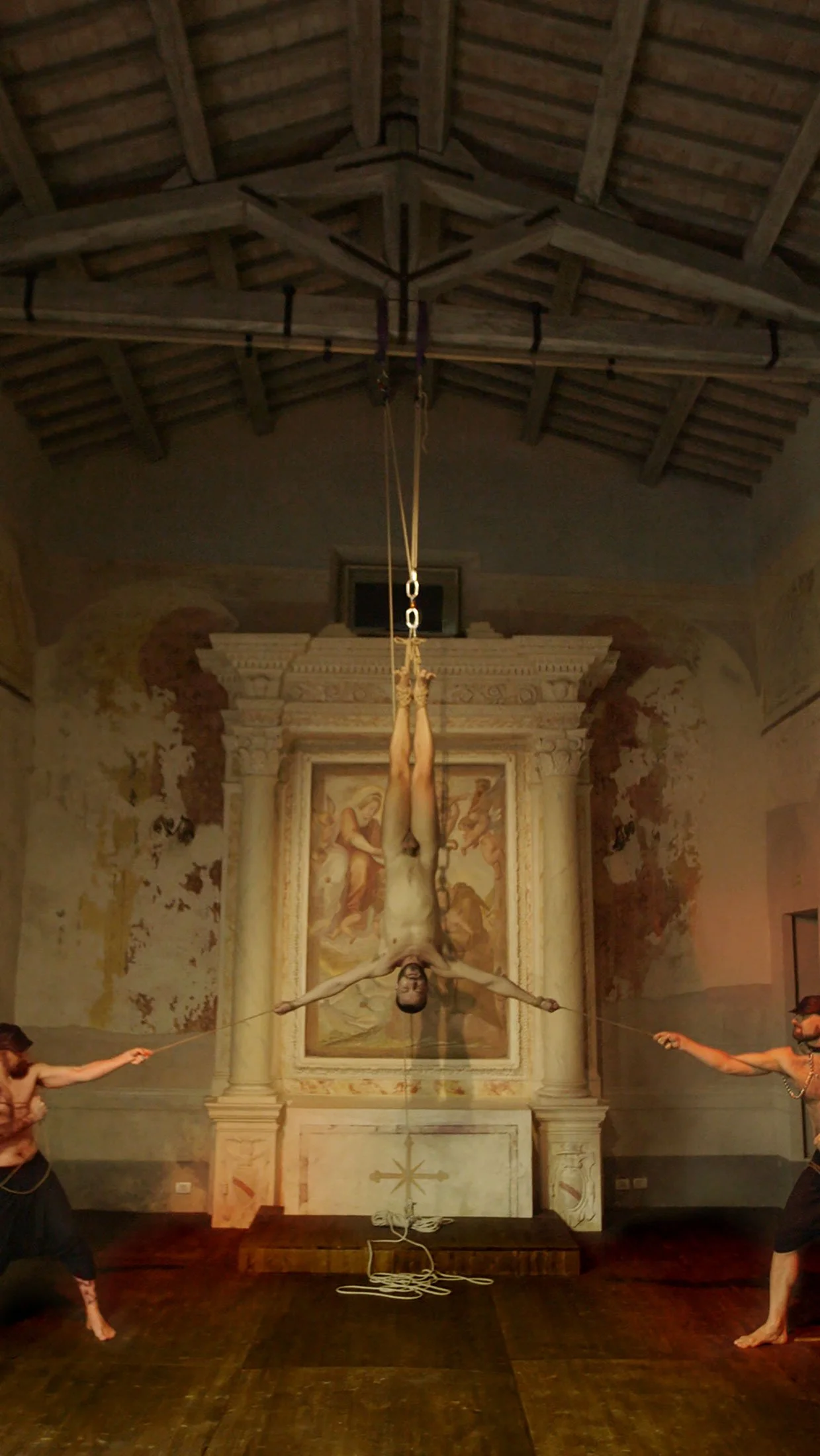
Carlos Motta “Inverted World” (2016) single channel HD video with sound, total running time 7:30
Nearby is Carlos Motta’s quietly mesmerizing 2016 video Inverted World, in which the artist is methodically bound and strung up in an inverted crucifixion in an old, frescoed chapel. The show’s title creeps in conceptually to suggest liberation is possible through existential kink: finding the turn-on in what you hate/can’t escape/are subject to, and fucking embracing it. The blasphemy of the piece: turning crucifixion into bondage, of Motta imaging themselves as Christ inverted, feels newly satisfying to see in a publicly accessible space, given the rollback of rights in the name of supposedly Christian values that we are suffering through with Republican lawmakers and the current Supreme Court.
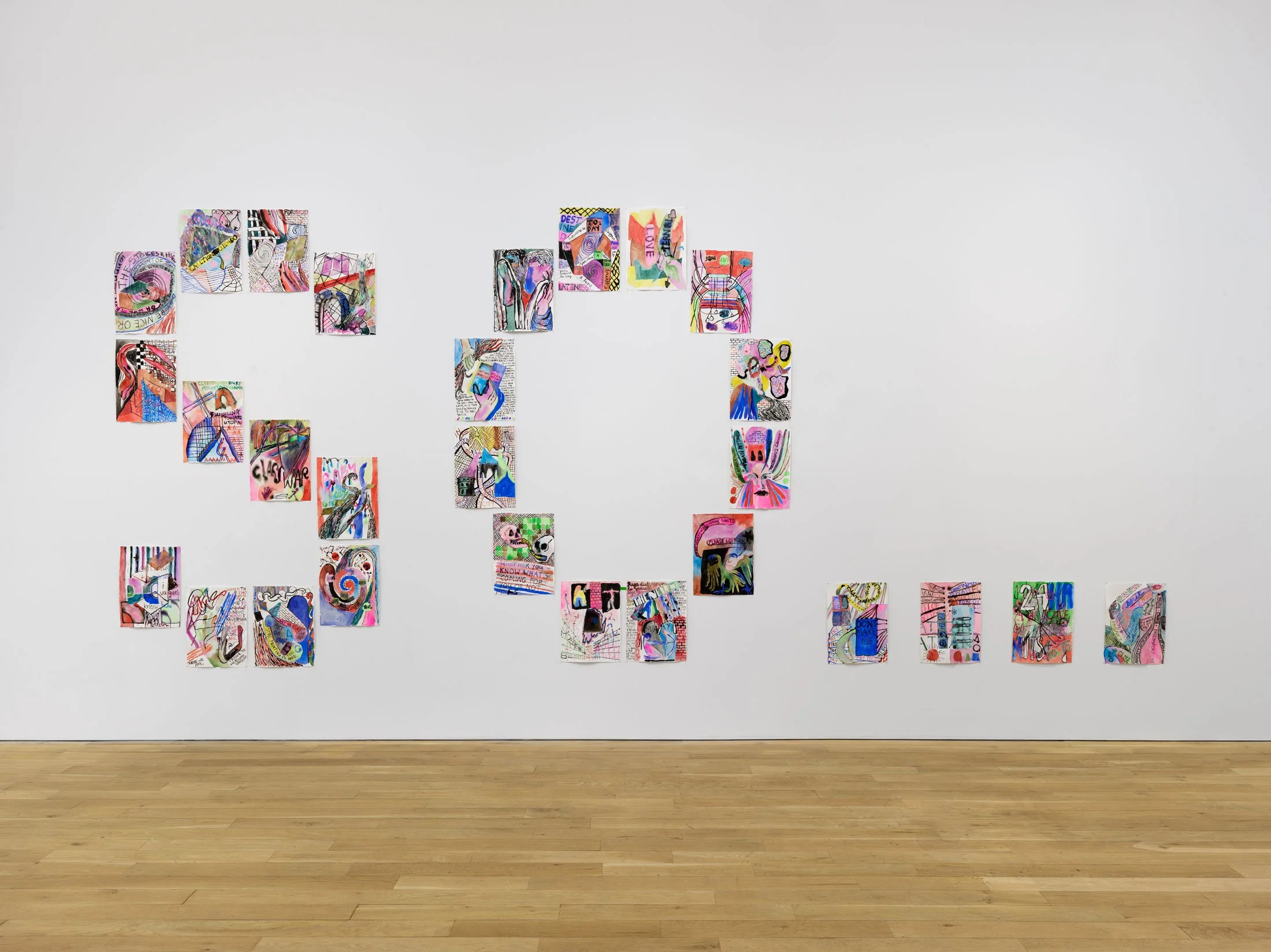
Gaby Collins-Fernandez, “SO…(4/8/26 to 5/28/26)” (2026) installation of 28 works on paper, 14 x 11 inches (each)
Gaby Collins-Fernandez’s installation of watercolors, SO…(4/8/26 to 5/28/26) presents another refreshingly clear take on contending with the bullshit of now. The artist has been making one watercolor a day since summer 2025, letting each be what it is, image and text aptly bleeding into one another. Phrases jump out: “For what? War + inane shit” and “Whether you know what’s coming for you or not, it is.” The nature of the project –-no watercolors are thrown out, they are displayed in chronological order —humbles the drawings, presents them as a strategy for being present with the metered days in each’s potential range of frustration and joy. As primarily diaristic, they resist didacticism; they are sweet, funny, relatable. A cry of anguish, or a way to work out an idea that keeps tumbling around the mind. The configuration “SO…” is ominous but playful, poking at the desire for art to be useful by stacking the papers to spell out a word that is itself an open-ended question, apropos of the collective temperature.
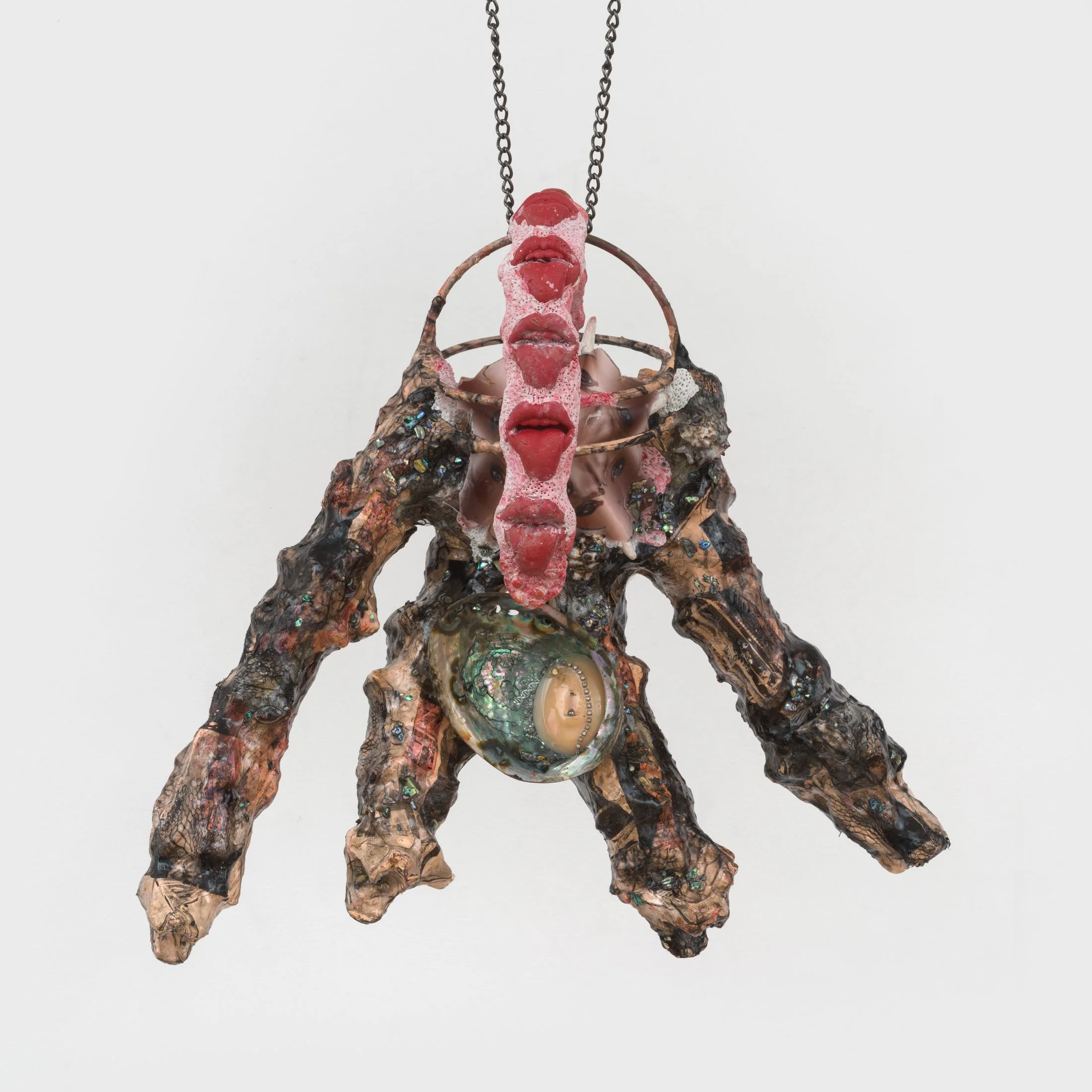
Florencia Escudero, “Digital Medusa” (2024) Resin with abalone, starfish, epoxy, shells, 3d-printed plastic, temporary tattoo paper, eva foam, steel, 22 x 24 x 15 inches
Florencia Escudero’s Digital Medusa hanging nearby makes a joyous mess of the now: a stalactited figure replete with a line of rock’n’roll lips. Abalone shell mixed with epoxy and other magic fashions chunky snake arms. Marinated in the charge of the room, Escudero’s sculpture reads to me as an embrace of alienation under late-stage capitalism: what to do with the fact that we have so much access to different kinds of objects, and little to no relationship with how or where they were made. She delights in the bizarro-absurdity of this over-abundant access to image, material, and ancient history. By bundling these things together in her lovingly handmade amalgamations, she inserts individual pleasure back into the object.
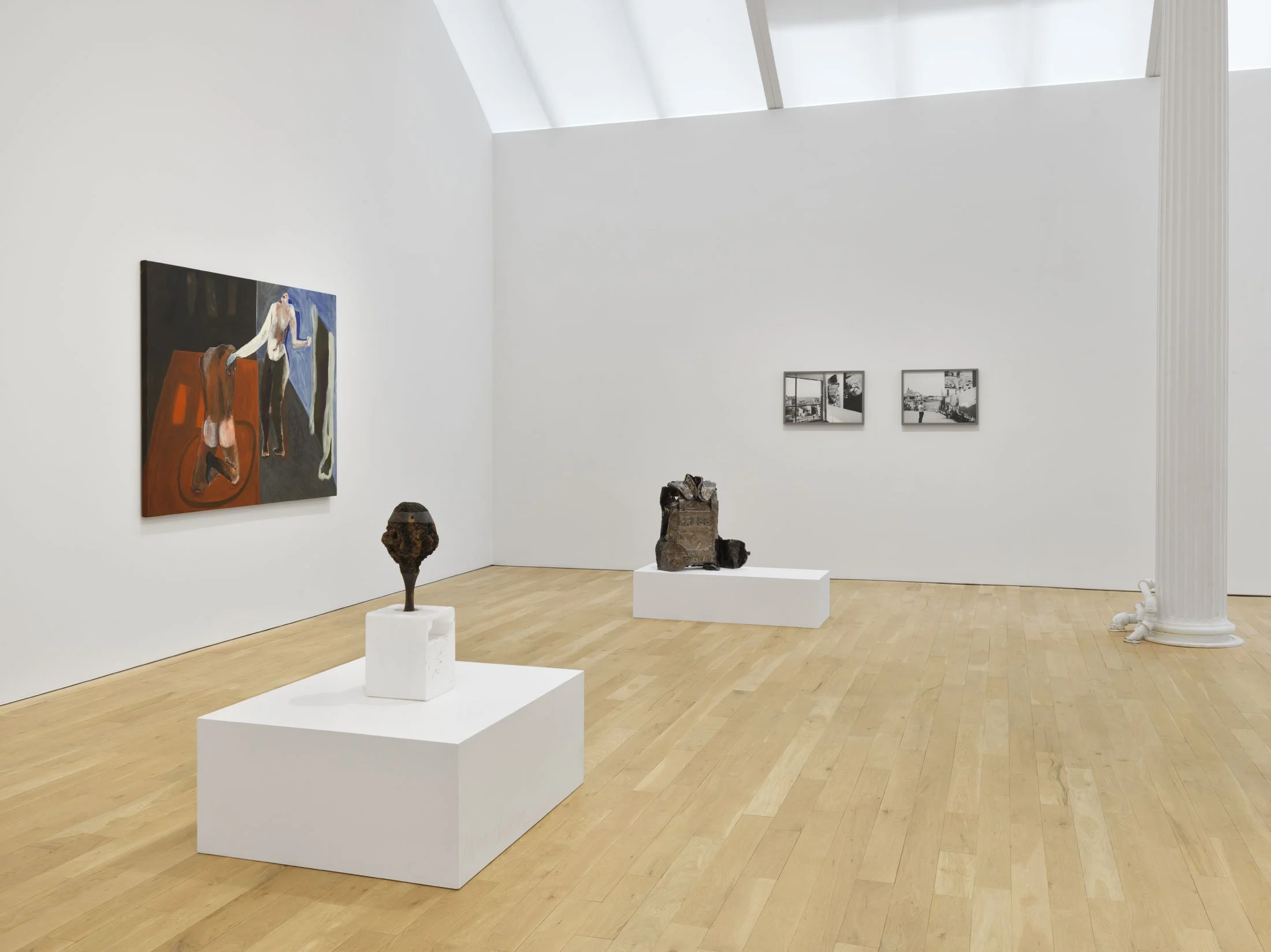
Installation view of In A Free State at Luhring Augustine New York, NY
Across the room, Manal Abu-Shaheen’s black and white photographs and Abed Elmajid Shalabi’s ceramic sculpture vibrate off each other. Both artists approach resistance through witness and slow observation. At first glance, Press Vest seems bronze, and the reveal that it is Palladium glazed ceramic then emphasizes the vest’s fragility. The translation of textures is soft but precise; the meaning of “press” is doubled as I can feel the impression of Velcro into clay. Empty, the bulletproof vest cast becomes a memorial to journalists who have worn such things and been killed anyways -–as we have seen and continue to see through Israel’s genocide in Gaza.
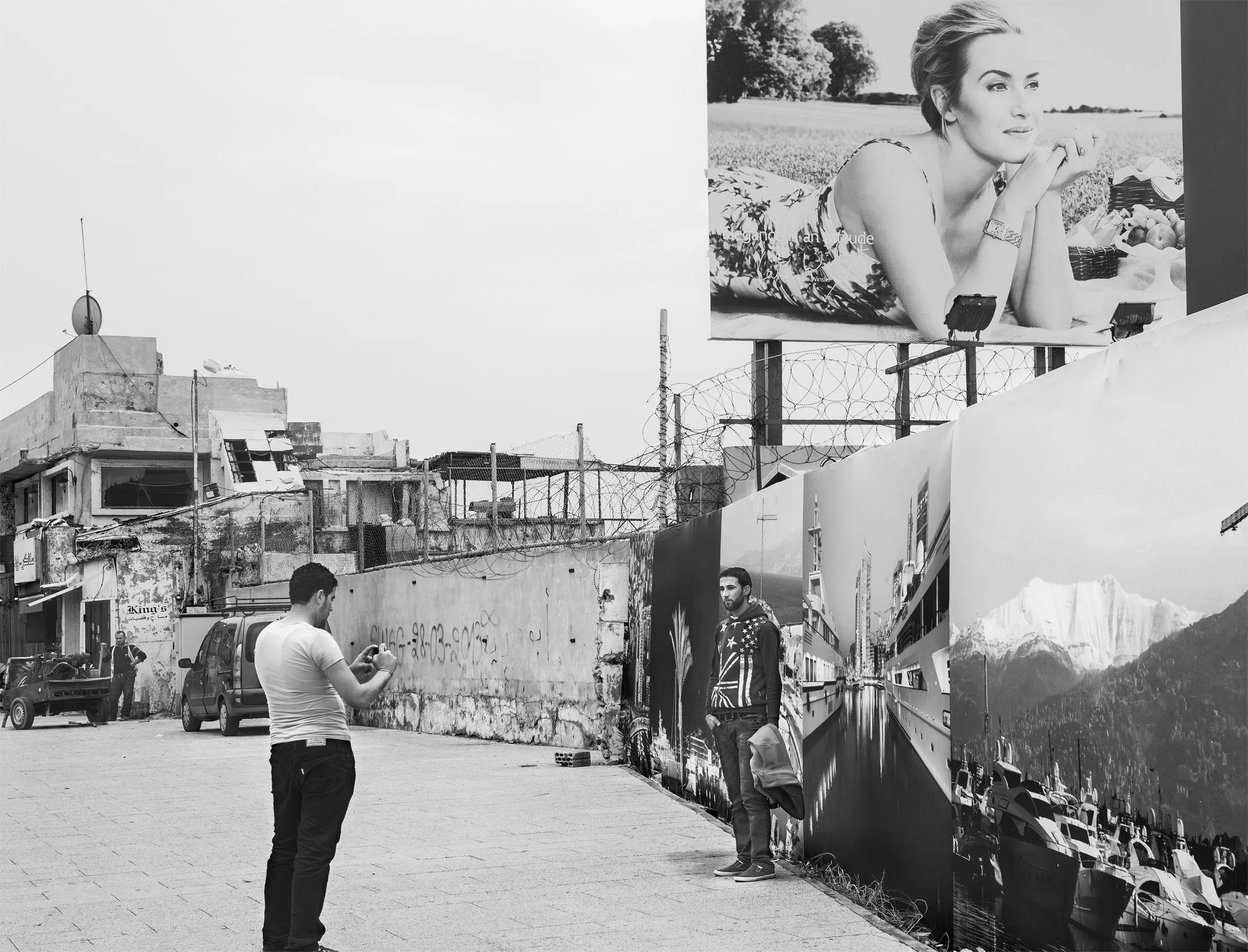
Manal Abu-Shaheen, “Kate Winslet, Beirut, Lebanon” (2016) Archival fiber inkjet print in artist frame, 16 x 21inches
On the wall, two of Abu-Shaheen’s photographs ask us to sit with related contradictions: the neo-colonial promises of bright and shiny Western advertisements contextualized within the everyday architecture of post-conflict Beirut. The experience of reading Abu-Shaheen’s photos literalizes some of her interest in these sites: the flatness of the advertisements confuses space and perspective. It takes work to reconcile the incongruity of image with landscape, to understand the photo as one view. Reading these slowly also allows moments of lightness in the ridiculousness of the chaos to bubble up, like in Kate Winslet: the US/UK flag on the hoodie of the man posing for a picture in front of travel billboards, the unamused observer far left, and, of course, Kate Winslet presiding over the whole barbed wire street.
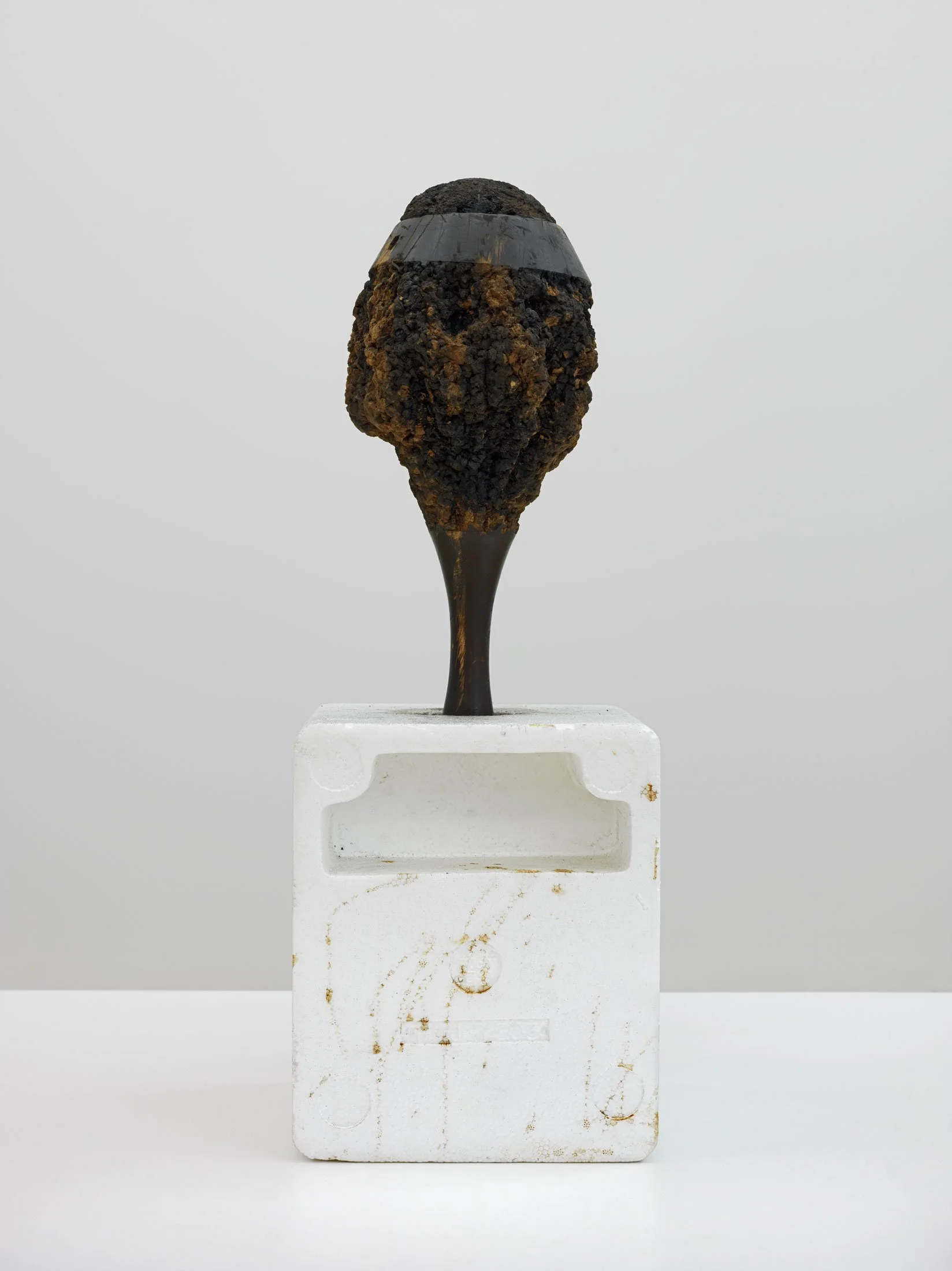
Huma Bhabha, “My Grave” (2013) Cork, wood, styrofoam, ink, and acrylic, 41 × 42.5 × 33 inches
Huma Bhabha’s 2013 My Grave must be mentioned. Burnt wood like bone shoved into a styrofoam box; a blackened cork orb lollipopped atop. Bhabha’s sculptures are all verbs. They are slapped, strapped, impaled, bound, nailed —minimalism’s confidence combined with earthy, gritty spirituality. I want to laugh and cry.
It’s exciting to see Doron and Salman branch out from work that resembles their own, while tracking their painterly commitment to the handmade and the sensual in different mediums. A few of the paintings share a gem-like prioritization of beauty with the curators’ work; others, like that by Shadi Al-Atallah, are wonderfully messy and raw.
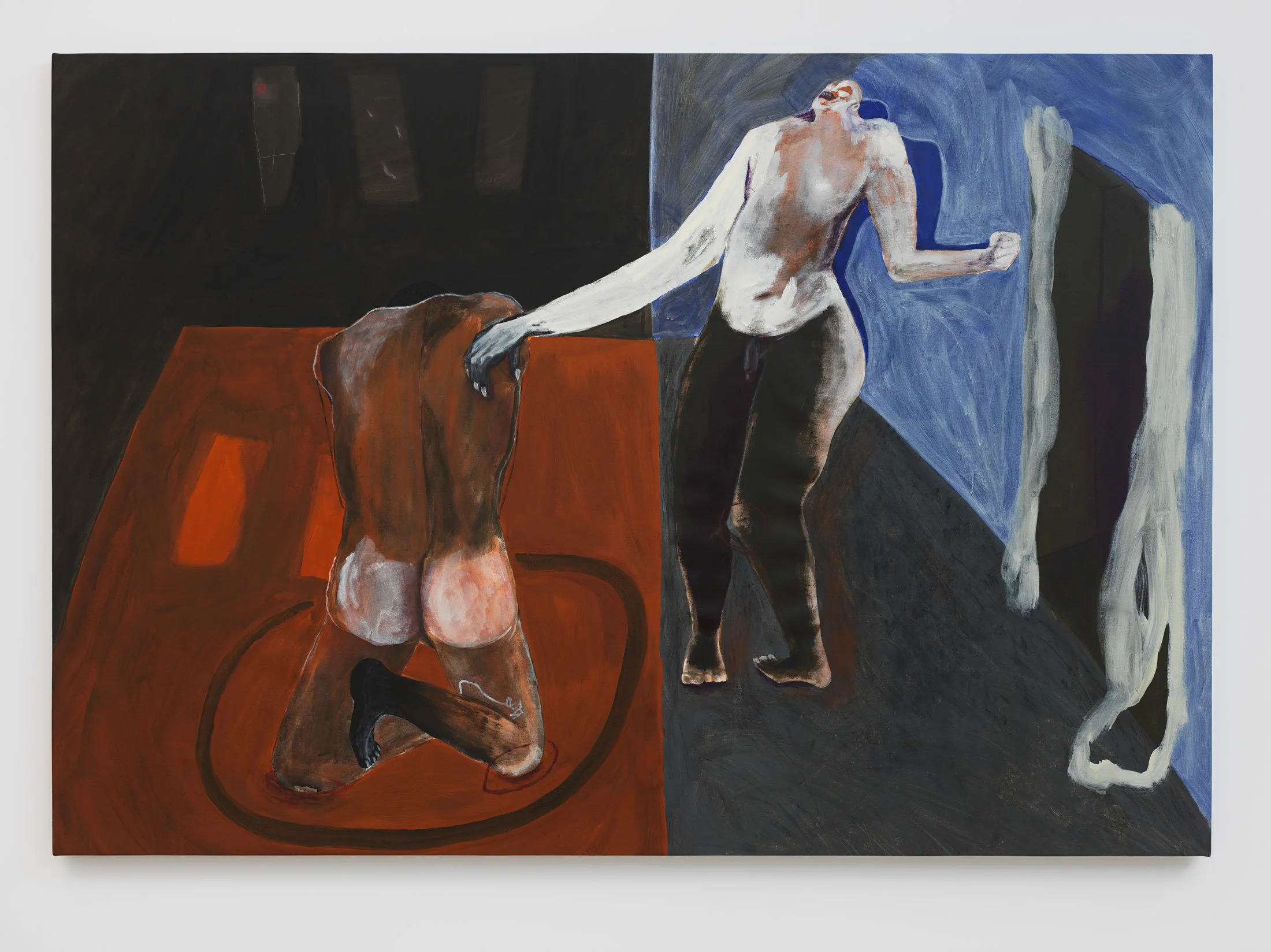
Shadi Al-Atallah, “Into the company of beasts” (2026) Acrylic, ink, and chinagraph pencil on canvas, 55 ⅛ x 78 ¾ inches
In a Free State becomes a call to unleash the subconscious. A free state starts with the mind, and art making is a tool to get free. The surrealists were on this tip after WWI; anti-colonial feminist scholar Suzanne Césaire set the stage for Afrofuturism by reflecting on the surrealist movement, calling for revolution via freedom of the mind from the rigidity–fascism pipeline. Embodied change must start with the body, and must start with the mind. I do believe that. Or, as Funkadelic put it, and the work in this show comes together to say… “Free Your Mind, and Your Ass Will Follow.”
Installation view of In A Free State at Luhring Augustine New York, NY
In a Free State at Luhring Augustine (17 White Street New York, NY 10013) through July 31.